January 9, 2026
25 min read
A comprehensive guide to the major security frameworks, how they overlap, which to pursue first, and how to build a culture of compliance that scales with your business.

Pio Greeff
Founder & Lead Developer
Deep dive article
If you are building a B2B SaaS product, serving enterprise clients, or handling any form of sensitive data, you have likely encountered the dreaded compliance questionnaire. A 200-question spreadsheet asking about your encryption standards, access controls, incident response procedures, and vendor management practices. For many startups, the first encounter with this document is a wake-up call: "We need to get our security house in order."
But where do you start?
The alphabet soup of compliance frameworks—ISO 27001, SOC 2, GDPR, HIPAA, PCI DSS, NIST CSF—can be overwhelming. Each has its own scope, requirements, and audit processes. Choosing the wrong starting point can waste months of effort and thousands of dollars.
This guide is designed to cut through the noise. Whether you are a founder wearing the CISO hat, a security professional building a program from scratch, or a developer who suddenly finds themselves responsible for "security stuff," this roadmap will help you navigate the landscape strategically.
We will cover:
Let us begin.
Before diving into implementation, you need to understand what each framework is trying to achieve and who it serves.
ISO/IEC 27001 is an international standard for information security management systems (ISMS). Published by the International Organization for Standardization, it provides a systematic approach to managing sensitive information.
Key Characteristics:
Who Needs It:
ISO 27001 is essential if you are:
According to the ISO Survey 2023, there are over 70,000 ISO 27001 certifications worldwide, with the number growing approximately 20% year-over-year.

ISO 27001 Overview
SOC 2 (System and Organization Controls 2) is a framework developed by the American Institute of Certified Public Accountants (AICPA). It is specifically designed for service organizations that store customer data in the cloud.
Key Characteristics:
Who Needs It:
SOC 2 is essential if you are:
A 2024 survey by Drata found that 87% of enterprise buyers require SOC 2 reports from their SaaS vendors before signing contracts.

SOC 2 Compliance Overview
The General Data Protection Regulation is not a certification—it is a legal requirement. Enacted by the European Union in 2018, GDPR governs how organizations collect, process, and protect the personal data of EU residents.
Key Characteristics:
Who Needs It:
GDPR compliance is mandatory if you:
We have written extensively about the evolving privacy landscape in our article on The 2026 Global Compliance Landscape. GDPR is just one piece of a fragmented regulatory puzzle that includes CCPA, LGPD, and dozens of emerging state and national laws.
GDPR Explained
Here is the good news: these frameworks share significant overlap. An organization that implements strong security controls for one framework will find that many of those controls satisfy requirements for others.
| Control Domain | ISO 27001 | SOC 2 | GDPR |
|---|---|---|---|
| Access Control | A.9 | CC6.1 | Art. 32 |
| Encryption | A.10 | CC6.1, CC6.7 | Art. 32 |
| Incident Response | A.16 | CC7.3, CC7.4 | Art. 33, 34 |
| Vendor Management | A.15 | CC9.2 | Art. 28 |
| Risk Assessment | A.8 | CC3.1 | Art. 35 |
| Data Classification | A.8.2 | CC6.1 | Art. 30 |
| Employee Training | A.7 | CC1.4 | Art. 39 |
| Logging & Monitoring | A.12.4 | CC7.2 | Art. 32 |
Rather than treating each framework as a separate project, modern security programs adopt an integrated GRC (Governance, Risk, and Compliance) approach.
The National Institute of Standards and Technology (NIST) Cybersecurity Framework is often used as a unifying control catalog. NIST CSF organizes controls into five functions:
By mapping your controls to NIST CSF, you create a foundation that can be cross-walked to ISO 27001, SOC 2, and other frameworks with minimal duplication of effort.
NIST's official mapping resources provide detailed crosswalks between CSF and ISO 27001, COBIT, and other standards.
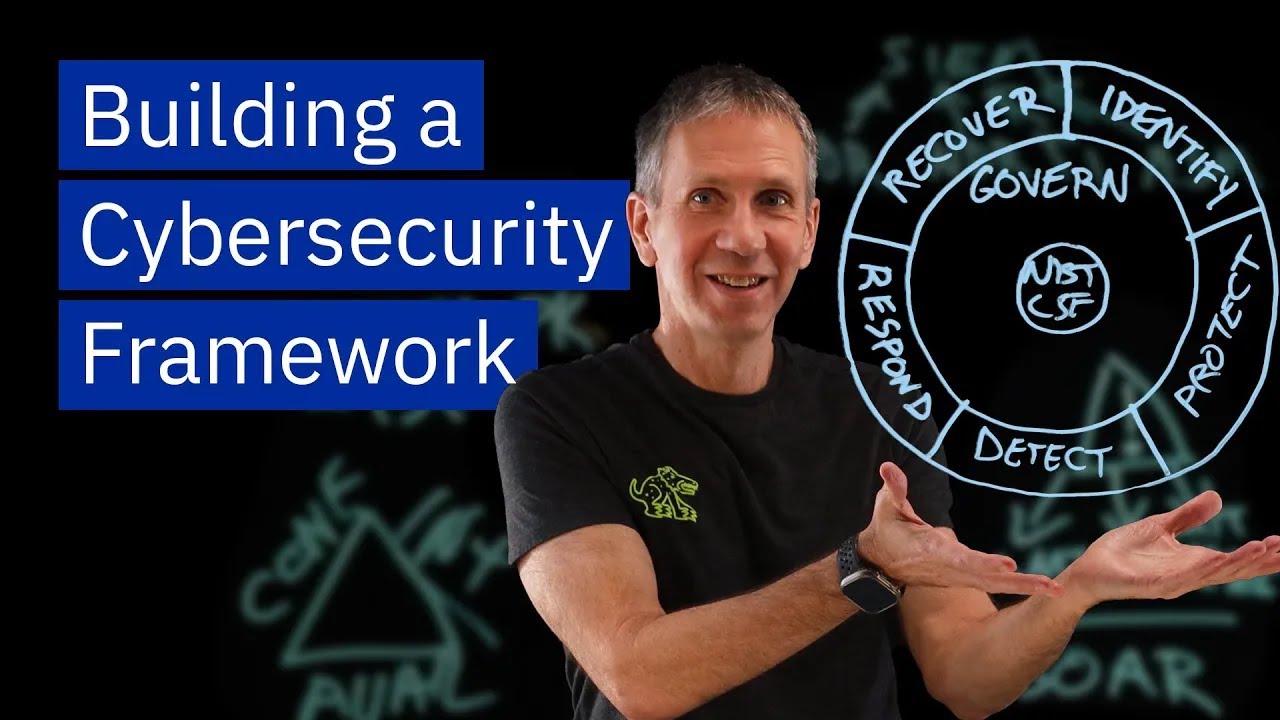
NIST Framework Overview
With limited resources, you cannot pursue everything at once. Here is a decision framework based on your business context:
Typical Timeline: 3-6 months for Type I, 9-12 months for Type II
Typical Timeline: 9-18 months for initial certification
Typical Timeline: 3-6 months for baseline compliance; ongoing maintenance
This staged approach builds momentum and delivers tangible milestones that can be communicated to customers and investors.
Whether you are preparing for SOC 2 or ISO 27001, the preparation process follows a similar pattern. Here is a practical playbook:
Define the boundaries of your audit. For SOC 2, this means identifying:
For ISO 27001, you define the scope of your ISMS—this could be a specific product, business unit, or the entire organization.
Pro Tip: Start narrow. A scoped SOC 2 covering only your core SaaS product is easier to achieve than an organization-wide assessment.
Before engaging auditors, conduct an internal gap assessment. Many organizations use readiness platforms like:
These platforms provide pre-mapped control checklists that identify gaps in your current posture.
Address the gaps identified in Step 2. Common control implementations include:
Technical Controls:
Administrative Controls:
Physical Controls (if applicable):
Auditors require evidence that controls are designed and operating effectively. This includes:
Automation platforms significantly reduce the burden of evidence collection by integrating with your cloud providers, identity providers, and HR systems.
Before the formal audit, conduct a readiness assessment. This is effectively a practice audit:
Engage a licensed auditor:
The audit process typically involves:
SOC 2 Audit Walkthrough
Compliance is a snapshot. Security is a culture.
Passing an audit proves that you had controls in place at a point in time. But breaches happen to compliant organizations every day. The 2024 Verizon Data Breach Investigations Report (DBIR) found that 74% of breaches involved a human element—phishing, credential theft, or human error.
True security maturity requires:
1. Continuous Monitoring
Compliance automation platforms now offer continuous monitoring that alerts you when controls drift out of compliance. Cloud security posture management (CSPM) tools like Wiz, Lacework, and Orca Security provide real-time visibility into your cloud infrastructure.
2. Security Champions Program
Embed security advocates within engineering teams. These "security champions" receive additional training and serve as the first point of contact for security questions. OWASP's Security Champions Guide provides a framework for building this program.
3. Secure Development Lifecycle (SDL)
Integrate security into your development process:
4. Tabletop Exercises
Regularly simulate security incidents to test your response capabilities. The CISA Tabletop Exercise Packages (CTEPs) provide free, scenario-based exercises for organizations of all sizes.
5. Executive Buy-In
Security culture starts at the top. When executives model secure behavior (using password managers, questioning suspicious emails, prioritizing security investments), it signals that security is a business priority, not an IT afterthought.
Let us address the elephant in the room: compliance is not cheap.
| Item | SOC 2 Type II | ISO 27001 |
|---|---|---|
| Compliance Platform | $15,000 - $50,000/year | $15,000 - $50,000/year |
| Consultant/Readiness | $10,000 - $40,000 | $15,000 - $50,000 |
| Formal Audit | $20,000 - $60,000 | $15,000 - $40,000 |
| Internal Staff Time | 200-500 hours | 300-600 hours |
| Total Year 1 | $50,000 - $150,000 | $60,000 - $150,000 |
Note: Costs vary significantly based on company size, scope complexity, and existing security maturity. The above estimates are for a 50-200 person SaaS company.
Despite the cost, compliance delivers measurable ROI:
You might be wondering: what does this have to do with web design?
Everything.
Your website is your digital front door. It collects personal data (forms, cookies, analytics), processes transactions (e-commerce), and integrates with third-party services. It is subject to GDPR, CCPA, and other privacy regulations.
At grEEff.dev, we build compliance into our web projects from day one:
Your website is not exempt from your compliance program. It should be a showcase of your security posture, not a liability.
The compliance journey can feel daunting. The frameworks are complex, the audits are intense, and the costs are real.
But here is the reframe: compliance is a competitive advantage.
In a market where data breaches make headlines weekly, where enterprise buyers are increasingly security-conscious, and where regulators are becoming more aggressive, demonstrating a strong security posture is a differentiator.
Your SOC 2 report is not just a checkbox—it is a sales asset. Your ISO 27001 certificate is not just a plaque on the wall—it is a trust signal that opens doors. Your GDPR compliance is not just legal risk mitigation—it is a statement that you respect your users' data.
Start where you are. Build incrementally. Treat compliance not as a destination but as a foundation for a security culture that scales with your business.
And if you need a website that is as secure as your security program, let us talk.
This article is for informational purposes only and does not constitute legal or professional advice. Consult with qualified legal, security, and compliance professionals for guidance specific to your organization.
Found this useful?
Share it with your network
